
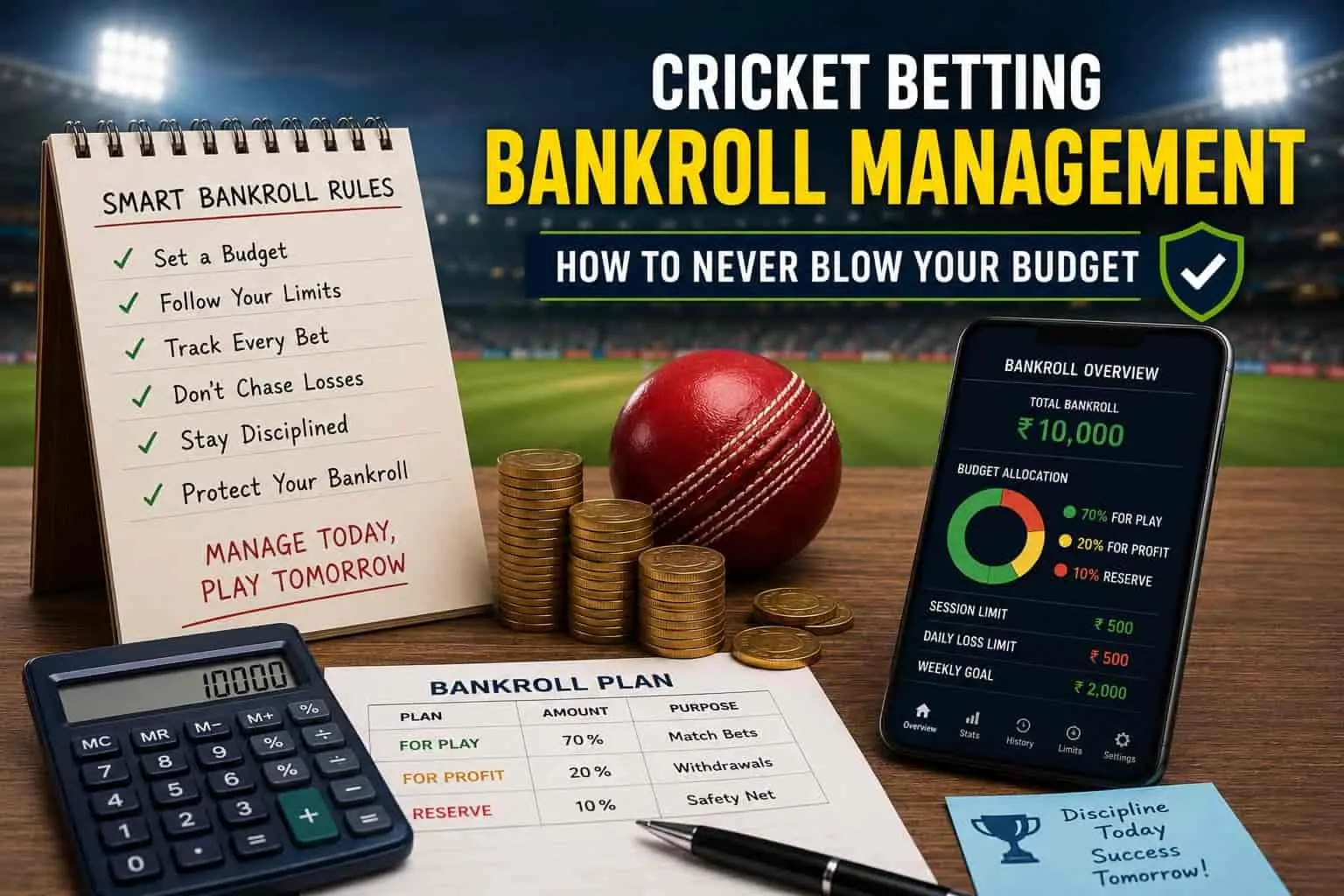
If you choose to participate in online cricket betting, one of the smartest things you can do is decide in advance how much money you are willing to spend. That decision matters far more than most people realize. Without a clear budget, it becomes very easy for small deposits to turn into larger losses, especially during long tournaments, high-pressure matches, or emotionally charged moments when you feel tempted to keep going.
Cricket betting can feel exciting because there are always new matches, new markets, and new opportunities to place a wager. But excitement can also make people lose track of how much they have spent. That is why bankroll management is not just a technical term—it is a practical financial habit that helps you stay in control. It gives you a boundary, and that boundary protects your everyday life from being affected by entertainment spending.
A responsible approach means treating betting like any other discretionary expense. You would not spend your grocery money on a movie ticket, and you should not use rent, savings, emergency funds, or bill money for betting. The goal is to keep your entertainment budget separate from your essential financial responsibilities so that your decisions remain calm, planned, and realistic.
Many online platforms provide tools such as deposit limits, transaction history, account controls, and self-exclusion options. These features are useful because they help users monitor their activity and reduce impulsive behavior. However, tools alone are not enough. You also need a personal plan, a clear limit, and the discipline to stop when that limit is reached.
In this guide, you’ll learn what a betting bankroll is, why it matters, how deposit limits work, how to calculate a realistic budget, common mistakes people make, and practical ways to keep your spending under control. The aim is not to encourage betting, but to help you approach it with more awareness and financial caution.
What Is a Betting Bankroll?
A betting bankroll is the amount of money you set aside in advance for entertainment spending related to betting. It should always come from discretionary income, which means money left over after your essential expenses have already been covered. This includes rent or home payments, food, utilities, transport, savings, debt repayments, and emergency funds.
A bankroll is not the same as your total available cash. Just because money is sitting in your account does not mean it should be used for betting. A responsible bankroll is a planned amount, not an impulse amount. It is money you can afford to lose without affecting your lifestyle or financial obligations.
It is also important to understand what a bankroll is not. It is not a target that you must spend. It is not a challenge to “use up.” It is not a pool of money that should be topped up every time you feel unlucky. Instead, it is a ceiling—a maximum limit that helps you avoid overspending.
For example, if you decide that your monthly entertainment budget is ₹2,000, that amount should be the absolute maximum you are willing to allocate for betting-related activity during that month. If you spend ₹1,200 in the first week, the remaining ₹800 is all that is left. Once it is gone, the budget is finished. That mindset is what keeps bankroll management effective.
Why Bankroll Management Matters
Having a clear spending limit can help you in several important ways. First, it keeps betting separate from essential household expenses. That separation is critical because once entertainment money starts mixing with money meant for bills or savings, financial stress can build quickly.
Second, bankroll management helps you track where your money goes. Many people underestimate how much they spend because they only think about individual deposits, not the total amount over a week or a month. A structured budget makes spending visible, and what is visible is easier to control.
Third, it reduces impulsive deposits. When there is no plan, it becomes easy to make one more deposit after a loss or one more deposit before a big match. Those small decisions often add up faster than expected. A bankroll gives you a stopping point before emotions take over.
Fourth, it helps you make calmer decisions. When you already know your limit, you are less likely to act out of frustration, excitement, or pressure. That can make the entire experience feel more controlled and less stressful.
Finally, bankroll management prevents small deposits from gradually becoming a larger financial problem. Many people do not overspend in one dramatic moment. Instead, they overspend in tiny steps—one deposit here, another there, then another after a loss. A budget helps stop that pattern before it grows.
Good Habits vs. Risky Habits
| Good Budgeting Habits | Risky Spending Habits |
| Set a fixed monthly limit before betting | Decide on spending in the middle of a match |
| Use only discretionary income | Use rent, savings, or emergency money |
| Track deposits and withdrawals | Ignore transaction history |
| Stop when the limit is reached | Add more money after losses |
| Take breaks during long tournaments | Keep betting continuously without pause |
The Small Deposits That Added Up
A friend once shared the experience of someone who loved cricket almost as much as late-night chai. This person could spend hours discussing a thrilling last-over finish and occasionally placed bets during major IPL matches. In the beginning, everything seemed under control because the deposits were always small—₹300 here, ₹500 there, and sometimes ₹700 before a match that felt too exciting to ignore.
For quite some time, there was a genuine belief that spending was being managed responsibly. After all, there were never any large deposits, so it didn’t feel like much money was being used. However, after several weeks, while checking a bank statement, there was an unexpected surprise. The total amount deposited had quietly crossed ₹9,000. It wasn’t a single big loss that stood out—it was the realization that dozens of small deposits had gradually added up without being noticed.
Later, it became clear that most of those deposits happened during emotional moments. Whenever a favorite team lost a close match or an exciting run chase reached the final overs, there was always the thought, “Just one more small deposit.” Since every individual amount seemed affordable, there was never a reason to stop and calculate the overall spending.
That realization completely changed the approach. Before the next tournament started, a fixed monthly entertainment budget was written down, and a deposit limit available on the platform was activated. A simple personal rule was made: once the monthly limit was reached, there would be no more deposits until the following month.
The results were noticeable almost immediately. There was no longer a feeling of needing to react to every exciting moment in a match. Some weekends were spent simply watching cricket with friends instead of placing bets, and surprisingly, the game became more enjoyable without constantly thinking about making another deposit.
Looking back, the biggest lesson wasn’t about winning or losing. It was understood that financial discipline matters far more than chasing the excitement of every match. Small deposits may seem harmless individually, but without keeping track of them, they can quietly become a much larger expense than anyone expects.
How Deposit Limits Can Help
Many platforms allow users to set deposit limits, which are one of the most useful tools for controlling spending. These limits restrict how much money can be added to an account over a specific period. Common options include:
- Daily deposit limits
- Weekly deposit limits
- Monthly deposit limits
These tools do not guarantee financial safety on their own, but they can support your personal budget by creating a barrier between impulse and action. If you have already decided that your monthly entertainment budget is ₹3,000, setting a monthly deposit limit close to that amount can help you stay aligned with your plan.
Some platforms also offer additional controls such as:
- Session reminders
- Time-out periods
- Self-exclusion tools
- Activity statements
- Reality checks that show how long you have been active
These features are especially helpful because they encourage users to pause and reflect. A reminder that you have been active for a long time can be enough to stop a rushed decision. A transaction statement can also reveal patterns you may not notice in the moment.
How to Use Deposit Limits Effectively
- Decide your budget before you start.
- Set the deposit limit slightly below or equal to that amount.
- Review your spending regularly.
- Do not raise the limit casually.
- Use time-outs if you feel tempted to keep depositing.
The key is to treat the limit as a real boundary, not a suggestion. If you keep changing the limit whenever you feel like spending more, the tool loses its value.
How to Calculate a Realistic Bankroll
A responsible bankroll should be based on your actual financial situation, not on hope, excitement, or what you think you might win back. A simple way to calculate it is to start with your monthly income and subtract all essential expenses first.
Step 1: List Essential Expenses
Write down the money you need for:
- Rent or home loan payments
- Groceries and food
- Electricity, water, internet, and phone bills
- Transport
- School or education costs
- Debt repayments
- Savings and emergency funds
Step 2: Identify Discretionary Income
After essential expenses are covered, look at what remains. This is the money that can be used for entertainment, hobbies, dining out, or other non-essential spending.
Step 3: Set a Strict Entertainment Limit
From that discretionary amount, decide how much you are comfortable using for betting-related entertainment. This should be an amount that would not create stress if it were fully spent.
Step 4: Break It Into Smaller Periods
Instead of setting one large amount for the whole month, divide it into weekly or session-based limits. This makes it easier to stay disciplined and prevents one bad day from consuming your entire budget.
Example Budget Breakdown
If your entertainment budget is ₹4,000 for the month, you might divide it like this:
- Week 1: ₹1,000
- Week 2: ₹1,000
- Week 3: ₹1,000
- Week 4: ₹1,000
This structure helps you avoid spending everything early in the month and then feeling pressured later.
Practical Tips for Staying Within Your Budget
Decide Your Limit Before a Tournament
One of the biggest mistakes people make is deciding how much to spend in the middle of a match or after seeing a result they did not expect. A better approach is to set your entertainment budget before the tournament begins. That way, your decision is based on planning rather than emotion.
Separate Entertainment Money
Keep betting funds separate from money needed for rent, food, education, savings, or emergencies. Some people use a separate wallet or account for entertainment spending so they can clearly see what is available and what is not. This separation makes it easier to avoid accidental overspending.
Review Your Transactions
Checking your deposit history regularly can help you understand your habits. You may notice that you spend more on weekends, during night matches, or after a loss. Once you see the pattern, it becomes easier to adjust your behavior.
Don’t Increase Your Budget After Losses
If you have already reached the limit you planned, do not add more money in an attempt to recover losses. That behavior often leads to even greater spending and more frustration. A budget only works if it stays fixed.
Take Breaks
Long tournaments can create a constant stream of betting opportunities. That can make it difficult to step back and think clearly. Taking breaks helps you reset mentally and reduces the chance of making rushed decisions. Even a short pause can make a difference.
Avoid Emotional Betting
People often spend more when they are frustrated, excited, bored, or trying to “make up” for a previous loss. Emotional decisions are usually the most expensive ones. If you notice your mood affecting your spending, step away before making another deposit.
Use a Spending Log
A simple notebook, spreadsheet, or notes app can help you track:
- Date of deposit
- Amount deposited
- Amount remaining
- Reason for spending
- Whether you stayed within your limit
This kind of record makes your habits more transparent and helps you stay accountable.
Common Mistakes People Make With Their Budget
Even people who intend to be careful can make budgeting mistakes. Some of the most common ones include:
Treating the Bankroll Like Extra Income
A bankroll is not profit, and it should never be treated like free money. It is a planned entertainment expense. Once it is gone, it is gone.
Using Borrowed Money
Borrowing money to continue betting is one of the clearest signs that spending has become unsafe. If you need to borrow to keep going, the activity is no longer within a healthy budget.
Ignoring Small Deposits
A single small deposit may not seem serious, but repeated small deposits can quickly become a large total. Always look at the full picture, not just one transaction.
Not Setting a Time Limit
Money is not the only thing that needs control. Time matters too. Long sessions can lead to fatigue and poor judgment, which often result in more spending.
Failing to Stop After Reaching the Limit
A budget only works if you respect it. If you keep going after the limit is reached, the plan loses meaning.
Warning Signs That Your Spending Needs Attention
It is important to recognize when betting is becoming financially unhealthy. Consider reviewing your habits if you notice any of the following:
- You are depositing more than you originally planned.
- You are thinking about betting even when you should be focusing on work or family.
- You are borrowing money to continue.
- You are hiding gambling expenses from family or friends.
- You feel anxious, guilty, or frustrated after spending.
- You are chasing losses by increasing deposits.
- You are neglecting responsibilities because of betting.
- You are using money meant for bills, savings, or essentials.
If these signs happen occasionally, it may be a warning to slow down. If they happen often, it may be time to stop completely and seek support.
Responsible Gambling Checklist
Use this checklist as a quick self-check before you spend:
- □ I have already paid for my essential expenses.
- □ I am using only discretionary money.
- □ I have set a fixed monthly entertainment budget.
- □ I have set deposit limits where possible.
- □ I am tracking my spending.
- □ I am not borrowing money to gamble.
- □ I am not trying to recover losses.
- □ I am taking breaks during long sessions.
- □ I am comfortable stopping when my limit is reached.
- □ Betting is not affecting my mood, work, or relationships.
If you cannot confidently check most of these boxes, it may be a sign that your current approach needs to change.
Frequently Asked Questions
Should I set a spending limit?
Yes. If you decide to gamble, setting a spending limit is one of the most effective ways to keep entertainment expenses under control. A limit gives you a clear boundary and helps prevent impulsive decisions.
Do deposit limits guarantee I won’t overspend?
No. Deposit limits are helpful, but they are only one part of responsible budgeting. They work best when combined with personal discipline, transaction tracking, and a willingness to stop when the limit is reached.
Should betting replace investing or saving?
No. Gambling should never be viewed as a substitute for saving, investing, or earning income. It is a form of entertainment with financial risk, not a financial plan.
What should I do if I feel I’m losing control?
Take a break from gambling, consider using any available self-exclusion tools, and speak to someone you trust. If the problem feels serious, professional gambling-support services may be helpful.
Is it better to use one large bankroll or smaller weekly budgets?
Smaller weekly budgets are often easier to manage because they create more frequent checkpoints. That makes it harder to overspend early and easier to notice when your habits are changing.
What if I keep going over my limit?
If you repeatedly go over your limit, that is a sign that your current system is not working. You may need stricter controls, a longer break, or complete self-exclusion depending on how serious the issue has become.
Managing your entertainment budget is one of the most effective ways to reduce financial risk if you choose to participate in online cricket betting. A clear bankroll, realistic deposit limits, and regular spending reviews can help you stay in control and avoid the stress that comes from overspending.
The most important rule is simple: never use money that you cannot afford to lose. Betting should never interfere with rent, bills, savings, or daily responsibilities. If you treat it as entertainment and keep strict boundaries around your spending, you are far more likely to avoid financial regret.
Remember that gambling always involves risk, and there is no guaranteed outcome. The safest approach is to plan, stay disciplined, and stop when your limit is reached. If betting stops being enjoyable or starts affecting your finances or well-being, taking a break is the right decision.